
Share KNARIK BOYADJIAN's obituary with others.
Invite friends and family to read the obituary and add memories.
Stay updated
We'll notify you when service details or new memories are added.
You're now following this obituary
We'll email you when there are updates.
Select your format and elements to print

IN LOVING MEMORY OF KNARIK BOYADJIAN
KNARIK
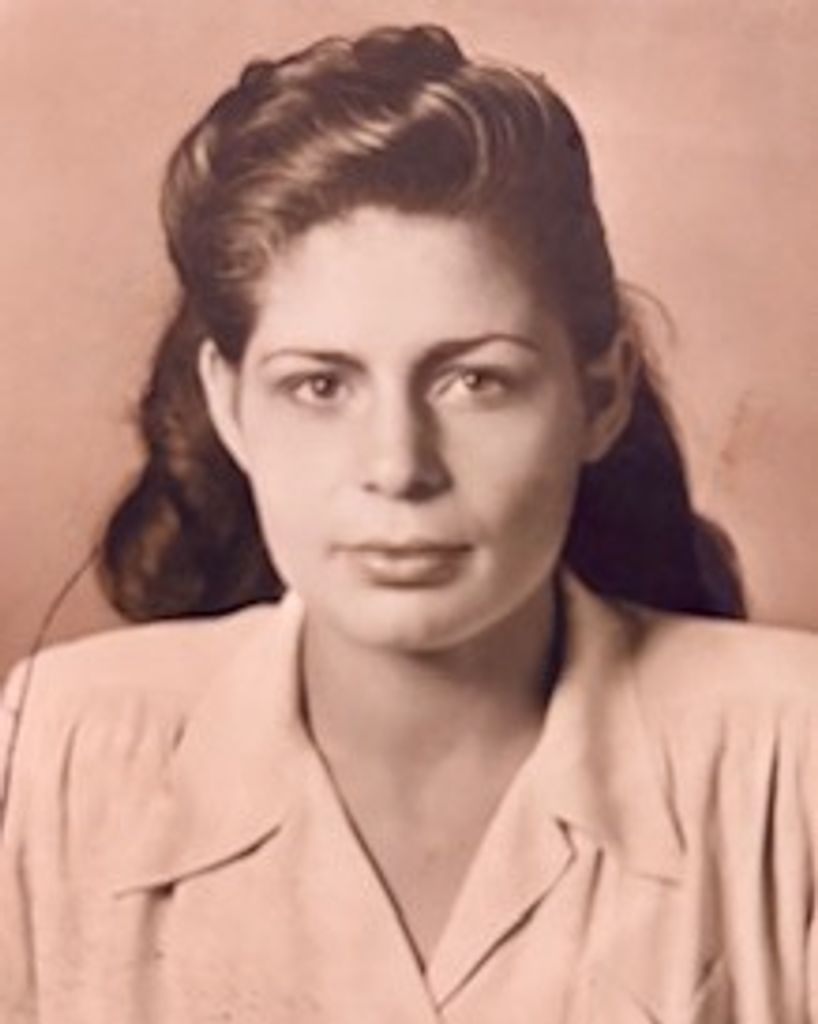
BOYADJIAN
Dec 7, 1930 — Apr 24, 2026
KNARIK BOYADJIAN's Obituary
Knarik Ohanian Boyadjian was born in Kerch, Ukraine, the youngest of five children born to Gulbenk Ohanian and Shushanik Deli-Baltayan, a Sepastatsi and Trabizontsi. Her siblings were named after kings and queens of Armenia: Levon, Ashkhen, Ardemis, Dikranouhi, and Knarik–except for Ardemis, who was named after Shushanik’s mother, and Knarik, who was the namesake of Gulbenk’s mother. Two older brothers, Ardashes and Sarkis, did not survive infancy.
In Kerch, they lived amongst a small community of Armenians next to the Black Sea with her father’s siblings and cousins. Knarik attended a local school and was educated in Russian as the Armenian schools had been closed. She was baptized in secret with the curtains to their home drawn by a priest who came to their home wearing civilian clothes. Their idyllic childhood was cut short when the German army advanced upon the Crimea. They gathered some of their belongings and were forced to leave via caravan. Mama said they stopped in villages along the way to find shelter, and she remembered that one Russian family offered a room to sleep in if my grandfather would give him one of his daughters. My grandfather told them that he had no daughter to give away and they slept at the roadside along the way and finally arrived in Odessa. They then continued the journey on freight trains and made their way to Germany. Their cousin Simon, who had been visiting his cousins, was separated from his family and fled with them and would remain separated from his family for the next fifty years. 5 decades later, he asked Mama to accompany him to LAX to greet the mother he hadn’t seen since he was a small child. Mama would remain close to Simon until his death from COVID a few years before her.
In Germany, the family was divided, and Mama, her oldest sister Ashkhen, and her mother were placed with a German family who happened to be the Burgermeister/mayor of the town. Mama told me that when the family gathered around the table of these strangers for their meals together, she would cry. It must have been so scary and confusing for her. During the war, the women picked potatoes in the fields as all able-bodied men were off to the front. Her oldest sister, Ashkhen would make Mama sit in the wheelbarrow and play while she picked potatoes in the field.
With the end of the war in 1945, a few of the displaced Armenians in Germany traveled from town to town and gathered all their compatriots to live together in the Funkerkaserne army barracks in Bad Cannstatt-Stuttgart. It was here where they established a school, organized scouts and dance troupes, and even had a working jail. Nearly 3,000 Armenians from all over Russia and Ukraine who were displaced made Funkerkaserne their home for nearly 7 years. The Ohanian family, including Gulbenk’s mother Narik, lived in a single room on the 3rd floor of Block 1 of the army barracks. They all slept together, and the room was separated by a simple curtain. Women cooked meals in a common kitchen and had their bread and cakes baked at a local bakery. At the Funkerkaserne, Mama continued her studies, was a dancer in the dance group, played volleyball on the volleyball team, and was also a scout. She loved performing recitations, especially Charents, and one of her performances was noted in the local Armenian camp newspaper. In 1949, she received a letter from an Armenian in Baghdad, Iraq, who had read her name in the paper and asked to be her pen pal. Mom never wrote back because her brother, who was very old-fashioned, forbade it. She did, however, keep the letter. My grandfather was a good provider for his family and sold items on the black market. He would bring home the coins and bills from sales of the day, spread them on the table and ask the children to sort and count them. Knarik, who was crafty and feisty, slipped one of the bills on the floor and covered it with her shoe in order to keep it. She was caught in the act by my grandfather, who told her that was the last time she would be tasked with counting money, and he thereafter relied on her more reliable sister, Anya, instead.
At the Funkerkaserne, Mama made lifelong friends. She and her cousin Vartanoush would sometimes venture out and take the tram to see a film at the local cinema. Although the camp didn’t have a library, there was a bookseller at the camp who would set out a table with books for sale, and Mama was an avid reader and read in both Russian and Armenian. She also took piano lessons in Stuttgart outside the camp, and her brother Levon bought a piano for her and hauled it up to their third-floor room so that she could practice.
While traveling through bases in Europe in the late 1940s as a food supply consultant for the US Army, a man named George Mardikian was made aware of the plight of his compatriots and helped found the Armenian National Committee to Aid Homeless Armenians (ANCHA) and raised the funds needed to help bring the DPs to America. Family by family, the DPs boarded ships for the week-long journey to America.
In March of 1950, Knarik and her family boarded the cargo ship The General Greeley in Bremerhaven. Most of the ship’s passengers, including Mama, stayed below deck for most of the week-long journey, plagued by nausea. They arrived at Ellis Island on March 27, 1950. In America, local Armenians did all they could to help the newly arrived immigrants. Mama and her family were placed with Virginia Apkarian’s family of Dearborn as they settled into their new lives in a new country. Alec Manoogian’s MASCO company employed many Armenians, and my mother worked in the plant’s Dearborn location, which was repurposed during the Korean War to manufacture artillery shells. Just last year, Mama happened to be in the hospital at the same time as one of the other DPs left from the community, Mannik Ajemian, who also worked at MASCO, and Mannik told me how much fun it was working alongside Mom in the factory.
After three years in Dearborn, the Ohanian family decided to move West, and my uncle Levon bought a new car and they drove cross-country to Los Angeles. My grandfather had saved $10,000, and they were able to purchase their first home outright on Gerhart Avenue in East Los Angeles.
In Los Angeles, the DPs found each other again. Mama was active in the AYF, and she and her camp classmates would go on trips and picnics together. The community they built and nurtured at the Funkerkaserne would be the basis of the community they built and nurtured in Los Angeles.
Mama worked as a key punch operator at Catalina for a decade and then worked with her brother Levon as a short-order cook on his hot lunch truck for over two decades. She said she worked with him for so long because no one else could or would, and as the youngest, she could get away with being sassy and talking back to him when he needed to be put in his place. They shared a special bond as the oldest and youngest siblings that remained until his death at the ripe old age of 97.
In November of 1963, she married my father, Sarkis Boyadjian, whom she met through Archbishop Smbat Lapajian. The newlyweds moved into a small apartment on Garfield Avenue in Montebello. In December of 1964, she had her first child, me. In 1966, they were blessed with their second child, a son they named Raffi, after the famous Armenian writer that Mama loved so much. In 1968, we moved to a house two blocks away from the school in Pico Rivera. Raffi and I, and many other classmates who lived on our block, walked together to school every day, which we attended from kindergarten through 12th grade, a school which was founded and built through the hard work of the DP community.
Mama was completely devoted to her family. Although she worked as a cook all day on the lunch truck, she would come home and cook a hot meal for us every single weekday, except for Fridays, when we’d go out to a local diner. For our birthdays, she would pack up the car with our friends and take us to Farrell’s ice cream parlor, and she would drive to Sarno’s on Vermont in Hollywood to pick up their special rum cake. Every Saturday, my mother and I would go out to lunch, and we must have tried literally every restaurant in Los Angeles. Many of those places no longer exist. A favorite was the Bullock’s Wilshire Tea Room, and she would sometimes take one of my friends along. It was her way of unwinding after a hard week at work, and she would cover the boils on her hands from working in front of the hot grill, relax, and be served for a change. She drove me to piano, ballet, and tap dance lessons, and encouraged my brother and me in whatever we wanted to try. When a traveling salesman came to our door selling the World Book encyclopedia and Childcraft, she and my father bought the set for my brother and me for what seemed like an enormous sum, and I ended up reading almost every volume. It not only instilled a love of reading in me, but it also signalled to us that books and reading were important.
She was very close to her sisters, and Mama would always tell me that even if they said a cross word to each other, they forgot about it in the morning and she could never understand how siblings would not talk to each other for years. We did an annual sisters and cousins trip to Palm Springs (or Mlap Sgnirps, as we called it) every Memorial Day weekend, which was always a lot of fun. We also had an aunt and cousins tradition of going to Knott’s Berry Farm for their chicken dinner, after which we’d sit and people-watch. Weekends were all about family. Mama was always there to help her brother or sisters, accompanying them to doctor’s appointments or just showing up, and she instilled this love and caring for family in all of us. Mama was an amazing cook and always did everything with a special flair, style, and elegance. If the school asked for something, Mom wouldn’t be the one to bring it in a plastic bag. She’d put it in a basket and make it look beautiful. She loved going to the beach and would set her small chair in the sand next to the shoreline and let the waves reach her feet. The ocean reminded her of home.
When she would still drive, she would come to my house often and do my laundry or cook while I was at work, and just overall spoil me. She would often also rearrange the furniture and ask me what was different when I got home. If I walked through the door and didn’t notice, which happened often, she would laugh. She had a knack for placement and decorating, something she continued to do at her own home at a ripe old age, moving furniture here and there by pushing it, defying her strength and age. She had a curiosity for the world around her. She always watched the news and wanted to know what was happening in the world.
Mama and I, the ultimate wanderers of the zodiac, traveled to many destinations around the world. Traveling with Mama was easy and effortless, and always a lot of fun. In 1997, we made a very special trip: Mama and I went back to find her house in Kerch that they had left behind during the war. We went to St Petersburg and then flew to Simferopol, met up with our cousins who lived there, and spent a few days in Yalta. When we arrived in Kerch, her hometown, we drove through the city and asked a passerby where her street could be found. The names of the streets had all changed, but the old man recognized the old street name. At some point, Mama asked my cousin to stop the car, and she got out and continued on foot from memory, and walked to her house. The same large rock was in the front where she sat with her cousin, and the same roof my grandfather had put up. I took a photo of her and her cousin sitting on the rock, which she remembered to be much larger, as she remembered everything through the eyes of a child. Although the house was in disrepair, the same owner lived in it from the time they left, and the house was still standing because it stood opposite some Roman-era cave ruins that Mama used to frequently talk about walking through as a young girl.
She lived her entire life within the Montebello community, in the same house in Pico Rivera since 1968. After my father’s death in 2023, my brother Raffi became her primary caregiver and looked after her with the greatest love, attention, and care. She retained her sharp memory until her last hours, and my brother and I would joke that she was bionic because she was the only old person we knew who wouldn’t have to turn the TV up to hear something and could hear a conversation from another room and ask what we were talking about. She also had a wicked sense of humor and made us laugh every single day.
We called her the last of the Mohicans, as she was truly one of a handful of the DP generation left. She spoke of the sadness of being the last one left in her family, and she told me that she saw her sisters often in her dreams. I often told her how lucky she was to have so many sisters, and I was sad because I didn’t. But that didn’t matter, because I had her.
Every time she began to recount a story from the camp or from her childhood, I turned on the voice recorder on my Apple Watch. I have over 450 recordings and am grateful that hearing her and my father’s voice and remembering an odd story is something that will always be accessible to me.
She doted on her only grandchildren, Shahan and Mher, and her face would light up whenever she spoke of them or whenever they called or visited. She was so proud of them and their accomplishments. She was so happy to have seen Shahan married to beautiful Sareen, and I’m sorry she won’t be able to see any great-grandchildren because she surely would have spoiled them rotten.
Mama had her share of health issues and beat cancer when I was only 15. Despite all the challenges, she kept bouncing back, and I would joke that she was a cat in her nineteenth life. She exited the world as peacefully as she could have possibly done, and I am eternally grateful for all the years we were able to live with her and enjoy her stories, company, and love. She was the best mother a girl could ask for. I told her I loved her every day, and when I asked her if she loved and missed me, she would simply say “always.”
I am grateful to have had such a wonderful mother for so long, and am grateful that I was able to hold her hand as she went on her next journey to join my father and her family. I will love and miss you forever, my beautiful Mama.
Funeral Services for KNARIK BOYADJIAN
Funeral Service

Tuesday
Holy Cross Armenian Apostolic Cathedral
Starts at 11:00 am (Pacific time)
KNARIK BOYADJIAN's Guestbook

Visits: 89
This site is protected by reCAPTCHA and the
Google Privacy Policy and Terms of Service apply.
Service map data © OpenStreetMap contributors